Most people don’t plan on needing crane assisted tree removal. It usually comes up when a tree feels like a problem you can’t ignore anymore. Too big. Too close to the house. Leaning the wrong way after a storm. At that point, the usual tools and techniques stop being enough.
Around Green Bay, this happens more often than homeowners expect. Mature trees, tighter lots, and strong weather don’t leave much margin for error. Crane assisted tree removal is used when safety has to come first and there’s no room for a mistake. In this guide, we’ll walk through when a crane is actually necessary, what situations call for it, and how experienced local crews like Urban Tree Service approach these jobs with care instead of shortcuts.
Understanding What Crane-Assisted Tree Removal Is
Crane-assisted tree removal is exactly what it sounds like, but the purpose behind it matters more than the name. This method is used when trees can’t be safely dismantled using ropes and drop zones alone. Instead of letting heavy sections fall, the crane supports and lifts them away. It’s a controlled process built around safety and planning, not speed.
How Crane-Assisted Tree Removal Works
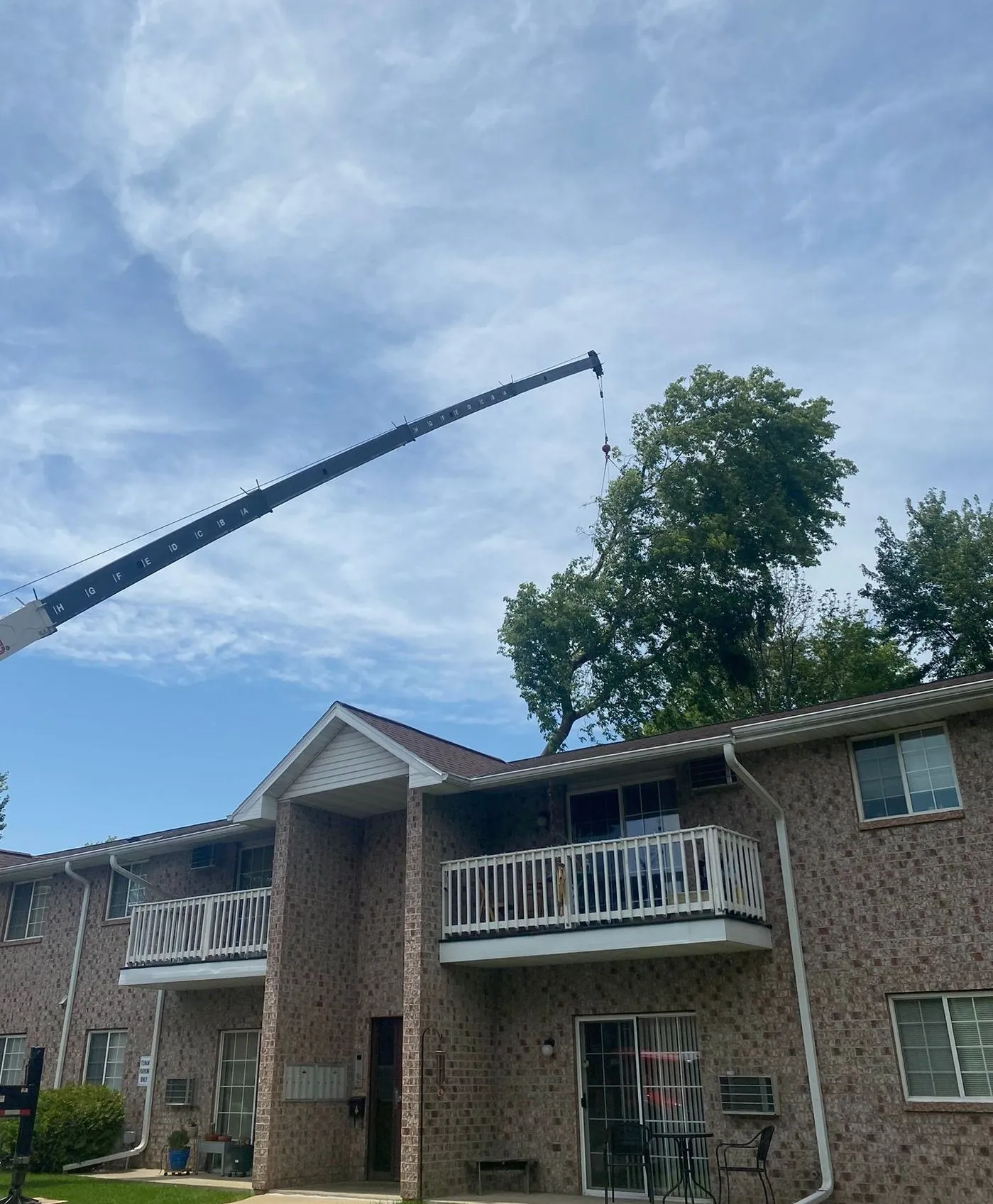
The crane is positioned near the tree and connected to sections as they’re cut. Each piece is supported before it’s separated, then lifted up and out of the area. Nothing drops unexpectedly. The crew controls where every section goes, which matters when homes, fences, or landscaping are close by.
Why Cranes Are Used Instead of Traditional Removal
Traditional tree removal relies on space. When that space doesn’t exist, risks increase fast. Cranes eliminate the guesswork by removing gravity from the equation. For technical tree removal jobs, that control makes all the difference.
Situations Where Crane Assisted Tree Removal Is Necessary
Most trees don’t need a crane. In fact, a lot of removals can be handled just fine with climbing and standard equipment. The problem comes when there’s nowhere for the tree to go. When space runs out or the tree becomes unstable, the safer options disappear quickly. Here are the most common reasons professionals turn to this method.
Trees Located Near Homes or Buildings
Trees growing close to homes create obvious risks. One wrong cut can mean roof damage, broken siding, or worse. Cranes allow sections to be lifted straight up and away without swinging or falling. Urban Tree Service often uses cranes for properties where protection matters more than speed.
Large or Overgrown Trees with Structural Risk
Some trees simply outgrow their strength. Heavy limbs, internal decay, or poor growth patterns can cause instability. Supporting the tree during removal prevents sudden shifts. That added stability keeps the job controlled from start to finish.
Limited Access or Tight Property Spaces
Many Green Bay properties don’t have wide open yards. Fences, garages, and neighboring homes limit access quickly. Crane-assisted tree removal avoids the need to drag large equipment through tight spaces. It keeps disruption low while keeping safety high.
Storm-Damaged or Unstable Trees
Storms change everything. Trees split, crack, or hang under pressure in ways that aren’t always visible. These situations are unpredictable. Cranes stabilize damaged trees before cutting begins, reducing sudden movement and helping crews work safely during emergency tree service calls.
The Safety Benefits of Crane-Assisted Tree Removal
Safety isn’t just a selling point. It’s the reason cranes are used at all. This method reduces risks that come with uncontrolled falls, shifting weight, and unstable structures. For homeowners, that means fewer unknowns during a stressful situation.
Reduced Risk to Homes and Landscaping
Dropping limbs isn’t an option when homes are nearby. Cranes lift sections cleanly, avoiding contact with roofs, lawns, and hardscapes. This approach keeps properties intact and avoids costly repairs. It’s one of the biggest advantages of professional tree service.
Greater Control During Technical Tree Removal
Every tree behaves differently when cut. Cranes give crews the ability to manage weight and movement deliberately. That control becomes critical during technical tree removal where mistakes carry consequences. Precision replaces risk.
Faster, More Efficient Removal Process
While cranes require planning, the actual removal often moves quicker. Larger sections are removed in fewer cuts. Less cutting means less time on-site. Homeowners benefit from faster resolution with fewer disruptions.
Why Professional Experience Matters for Crane-Assisted Tree Removal
Having a crane isn’t enough. Experience is what makes the equipment effective. Crane-assisted tree removal requires coordination, judgment, and deep understanding of tree behavior. That’s where professional crews stand apart.
Training and Coordination Between Crew and Operator
Communication is constant during crane removals. Climbers, ground crews, and operators work in sync. One missed signal can affect the entire operation. Experienced teams train for this level of coordination and follow strict safety routines.
Understanding Weight, Balance, and Tree Structure
Trees don’t distribute weight evenly. Professionals assess load points, wood condition, and internal decay before cutting. These evaluations guide every move. It’s not guesswork. It’s experience applied in real time.
Local Knowledge and Proper Planning
Local conditions matter more than most people realize. Soil, weather, and tree species across Northeast Wisconsin influence how removals are handled. Urban Tree Service brings that local understanding to every crane-assisted job. Planning begins long before the first cut.
Call the Crane-Assisted Tree Removal Experts You Can Trust
Some tree problems demand a higher level of care. Crane-assisted tree removal provides the control needed when standard methods aren’t enough. Urban Tree Service offers this specialized solution to homeowners throughout Green Bay and surrounding communities. With a small, experienced crew and owners Bill or Beau present on every job, you get clear communication and dependable service from start to finish. If a large, hazardous, or hard-to-reach tree has you concerned, don’t wait for conditions to worsen. Call today to schedule an estimate and talk through the safest path forward with professionals who know the area and the work.